

Iranian Strategic Influence
ABSTRACT
Since the 1979 Islamic Revolution, the strategic culture of resistance has dominated Iran’s strategic objective and foreign policy preference formation. Iran is a revisionist state that lacks overwhelming military and economic dominance in its near abroad, as such two pillars have emerged to support and export their strategic culture of resistance. These are Adaptive Resistance (pragmatism) and Designed Redundancy (deniability and insulation). These two themes of resistance provide content and structure to their strategic Influence campaigns, where “strategic Influence is the use of the elements of national power―diplomatic, military, economic, with and through information―to shape the information and operational environment in order to erode the will of the enemy…. This ‘new’ way of war is predicated on building narratives, activating identities, mobilizing proxies, and disorienting targets through the use of information in service of strategic goals.” Strategic influence is the way in which elements of the strategic culture of resistance are executed in Iran’s near abroad. To combat and defeat strategic influence campaigns, it is necessary to understand both the strategic cultural factors at play and the strategic influence campaigns that Iran deploys.
PUBLICATION STATUS:
This is published and currently available on AMAZON
SAMPLE
What is Strategic Influence? Strategic Influence is the use of the elements of national power—diplomatic, military, economic, with and through information—to shape the information and operational environment in order to erode the will of the enemy. For countries such as Russia, China, and Iran information is the main currency of their strategy, even if their main goal is to dominate a region—hegemony. Because the cost of militarily occupying a land is so high and often comes with international sanction, the “new” way of war is predicated on building narratives, activating identities, mobilizing proxies, and disorienting targets through the use of information in service of strategic goals. Strategic Influence is not limited to the cognitive domain as its effects are tacit, physical and kinetic action, and economic power can also be leveraged in its execution. The Grand Strategy of the actor may be traditionally
understood as hegemony, balancing, or revisionism, but the main strategy deployed is meant to influence local populations to create new strategic landscapes while eroding the will of the adversary. Strategic Influence is about influence because even military assets are used in support of the narrative. Strategic Influence is about strategy because it is orchestrated at the highest levels of government, integrates strategic and tactical lines of effort, and with whole of government approaches, is developed and deployed with the intent to achieve a strategic end. Strategic Influence involves the interleaving of various levels of analysis, often including competing issue areas, and various time frames.
Probability and Decisionmaking
ABSTRACT
Every consequential decision is made under uncertainty. Leaders know this in practice even when their institutions do not admit it in language. Whether the context is national security, enterprise strategy, public-sector modernization, cyber defense, or operational risk, the pattern is consistent: the information is incomplete, the system is adaptive, time is constrained, resources are finite, and consequences are real. Yet many organizations still plan, brief, and evaluate performance as though the world were deterministic—as though the future were a single outcome waiting to be discovered rather than a distribution of plausible outcomes waiting to be understood. This gap between how the world actually behaves and how institutions habitually reason is the central problem this book addresses.
PUBICATION STATUS:
I have a completed draft ready for publication. I will self-publish to avoid a long publication cycle.
SAMPLE
To prioritize intelligently, institutions must estimate likelihood and impact. They must evaluate tradeoffs under incomplete information. They must consider not only the most likely scenario but also the tails of the distribution—those low-probability, high-impact events that can destabilize entire systems. This is where probabilistic reasoning moves from academic abstraction to strategic necessity.
Uncertainty also interacts with time. Short-term systems may appear stable. Over extended horizons, variance compounds. Small deviations accumulate. Feedback loops amplify minor shifts into major transformations. Long planning cycles that assume static relationships often fail because they underestimate temporal dynamics.
Static planning presumes environmental stability. Probabilistic planning acknowledges drift. Drift can be a measurement error but it can also be a structural evolution. Models calibrated under one regime degrade under another. Supply chains optimized for efficiency become fragile under geopolitical strain. Risk models tuned to historical volatility misprice exposure under unprecedented shocks.
Recognizing the nature of uncertainty means accepting that models must evolve. It also means accepting that confidence is not evidence of accuracy. Institutions often reward decisiveness. Leaders are expected to speak with clarity. But clarity is not synonymous with certainty. In probabilistic systems, clarity should take the form of distributional transparency: explicit acknowledgment of ranges, assumptions, sensitivities, and tail risks.
This is the foundation upon which the rest of this book rests. If uncertainty is structural, then deterministic thinking is insufficient. If variance is inherent, then treating it as error distorts learning. If adaptation is constant, then static planning generates fragility. The nature of uncertainty determines the nature of responsible decision-making.
Probability and DM the Manual
ABSTRACT
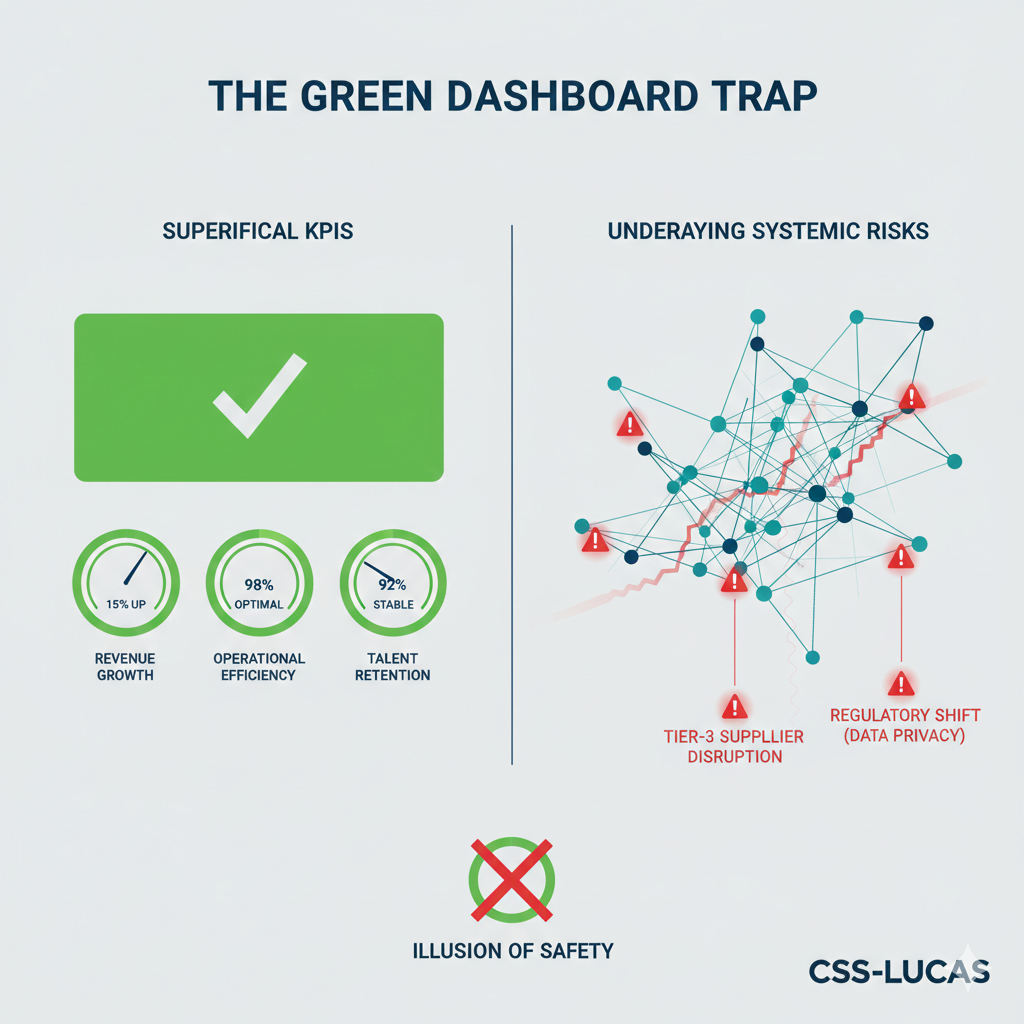
For the last century, institutional leadership has been built on a hollow altar: the “Point-Estimate.” In every boardroom, every operations center, and every staff briefing, we ask our subordinates for a date, a cost, or a percentage of readiness. In return, they provide a single, static number. This number is a lie. It is a deterministic mask worn by a probabilistic reality, a comfort blanket for leaders who fear the inherent volatility of the systems they command. When a commander accepts a report stating a unit is “85% Ready,” they are not accepting a fact; they are accepting a snapshot of a decayed past as a guarantee of an unknowable future. In a “Wicked” environment—where variables are so tightly coupled that a ripple in a supply chain in the Pacific can cause a catastrophic failure in a logistical node in Europe—that 85% is not a state. It is a distribution. The goal of this manual is to tear down the deterministic facade and replace it with the CSS-LUCAS (Computational Strategic Systems – Logic Under Complex Adaptive Simulations) Framework.
PUBLICATION STATUS:
Rough Draft of this largely practical mathematical expression of probability specifically for decisionmaking.
SAMPLE
This is not a book of theory. You have already read the theory; you have seen the 12 Rules; you understand that the status quo is untenable. You are here because you need the engine. This manual provides the end-to-end “Infrastructure of Truth” required to operationalize uncertainty.
By the time you reach the final chapter, you will have the blueprints to:
- Quantify the Unquantifiable: Move from “I think we are ready” to “The simulation shows a 72% probability of mission success within these specific variance bounds.”
- Govern the Logic Engine: Ensure that the data entering your models is not “Garbage In,” but verified, traceable intelligence that respects the rules of data provenance.
- Navigate the Decision Surface: Move away from static spreadsheets and toward an interactive, multi-dimensional interface where you can see—literally—where a small shift in resources creates the largest impact on systemic stability.
The Architecture of Command
This volume is structured to mirror a 90-day institutional transformation. We begin in Chapter 1 with the Institutional Diagnostic, a cold-eyed audit of the “Deterministic Debt” your organization has currently accrued. We then move into the Governance Protocols of Part I, establishing the “Rules of Truth” that prevent cognitive bias from corrupting your data.
In Part II, we build the LUCAS Engine. This is the technical heart of the system—the Monte Carlo simulations, the Agent-Based Models, and the MLOps pipelines that keep your models “Live” and calibrated against a shifting reality. Finally, in Part III, we move to the Command Interface, teaching you how to lead from the “Decision Surface” and institutionalize these practices across your entire staff.
The transition from a Deterministic Leader to a Probabilistic Commander is not a shift in tools; it is a shift in identity. It is the realization that you do not control outcomes—you control the distribution of possibilities.
Probability and DM Essays
ABSTRACT
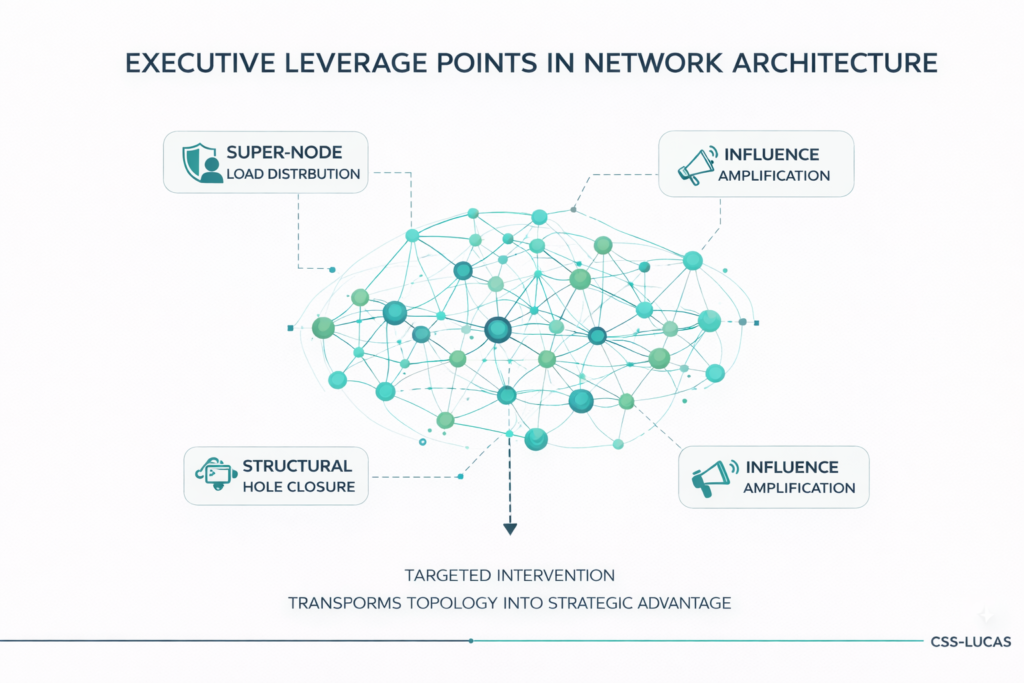
The modern enterprise has outpaced the legacy tools designed to manage it. We are currently witnessing a historical shift in the nature of organizational risk. In a hyper-connected global economy, market volatility, workforce instability, and technological acceleration have shifted from being external variables to becoming intrinsic, systemic forces. This shift has created what we define as the “Foresight Gap”—a critical, high-stakes disconnect between the inherent complexity of the systems leaders navigate and the linear, static models historically used to guide decision-making.
PUBLICATION STATUS:
These are five articles already written and ready for serial publications on LinkedIn.
SAMPLE
The rapid ascent of “Agentic AI” and Large Language Models (LLMs) has introduced a new paradox to the boardroom. Leaders now have the ability to generate “plausible” strategies and competitive analyses at high velocity. However, this speed often comes at the expense of structural integrity.
Traditional AI excels at pattern matching—predicting the next likely outcome based on historical correlations. But complex systems are defined by “emergence,” where the collective behavior of the system cannot be predicted simply by looking at its past individual parts. If the underlying rules of the market shift—due to a pandemic, a radical new technology, or a geopolitical rupture—pattern matching fails because the “pattern” itself has changed.
Relying on AI for high-stakes strategy without a rigorous verification layer is a risk-multiplication event. It provides the illusion of certainty while ignoring the causal physics of the specific organization. The executive’s role in the age of AI is no longer merely to decide, but to verify the structural “weight-bearing” capacity of the proposed path. We do not need faster guesses; we need a way to test the “physics” of our strategy before we launch.
For more information on Probability Modeling or to see some of the Computational Modeling we do, please visit CSS-LUCAS.
The Dominican Way of Life
ABSTRACT
This is partly an exploration and explanation of Dominican spirituality, and partly
PUBLICATION STATUS:
This is published here: Extraordinary Catholics
SAMPLE
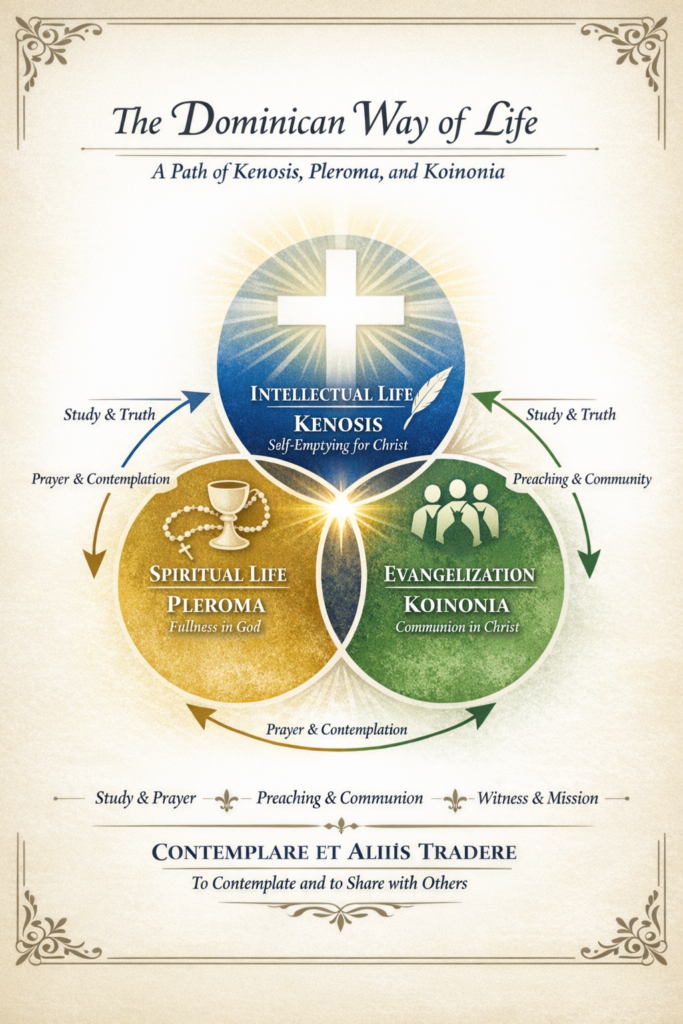
For all Christians, the ultimate goal of life is union with God. For Dominicans, this pursuit takes a distinctive form shaped by Dominic’s example. His study, prayer, and preaching were driven by a single desire to know God, love God, and make God known. Dominic immersed himself in scripture because scripture is the privileged place where God reveals Godself. Through disciplined study and sustained prayer, Dominic grew in understanding of the mysteries of God. That understanding matured into wisdom, and wisdom bore fruit in charity. In Saint Dominic: The Grace of the Word, Guy Bedouelle observes that Dominic’s life shows how a spirituality ordered to contemplation and union with God necessarily transforms the world.
Within the Dominican tradition, study is not merely preparation for ministry or a professional requirement. It functions as an ascetical discipline. Like fasting or silence, study orders desire, trains attention, and disciplines the intellect toward wisdom. The labor of study forms humility by revealing the limits of one’s understanding, and it forms charity by orienting knowledge toward service. When ordered to Christ and sustained by prayer, study becomes a form of listening, an attentive openness to God’s self-disclosure that prepares the preacher to speak with clarity, humility, and mercy.
Discipleship: Dimensions and Dynamics
ABSTRACT
This paper examines Christian Anthropology—specifically the doctrine of imago Dei—as a foundational framework for understanding discipleship and for identifying the dispositions and dynamics necessary for effective disciple formation. Grounding discipleship in Christian Anthropology provides a more stable theological mooring, enabling a deeper exploration, examination, and articulation of what discipleship entails and how it may be cultivated intentionally within Christian communities. By extending these anthropological insights toward the level of a formative framework, this work seeks both to test the value of the theological approach and to aid local churches, seminaries, and other related institutions in the essential task of forming disciples. The central thesis is that Christian Anthropology deepens our understanding of imago Dei, which in turn enables a more precise and theologically grounded definition of discipleship.
PUBLICATION STATUS:
Rough draft completed. Making final decisions on publication venue.
SAMPLE
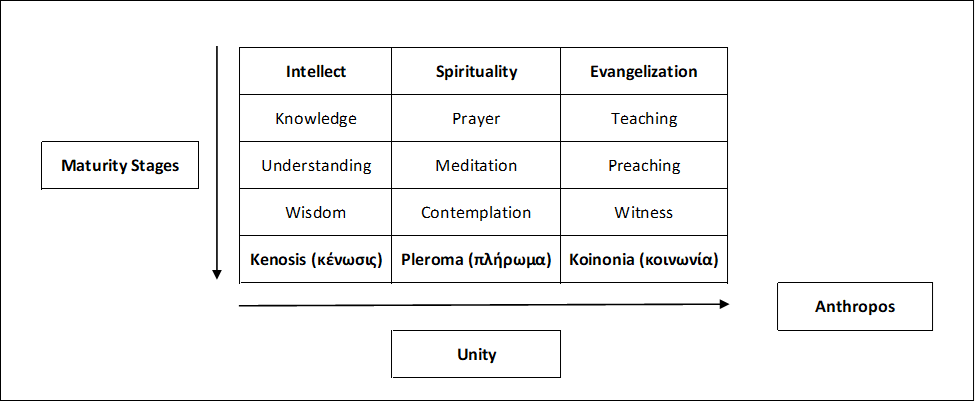
Anthropology is the study of humanity, the term originates in Greek where Anthropos means humanity, i.e. the human person, and ology the logic or study of a subject. Christian Anthropology is the study of humanity in reference to being created by God, the implications of which are manifold.[1] These implications give rise to such questions as these: 1) why do humans exist? 2) for what purpose were humans created? 3) what is the nature of humanity, 4) what is our relationship to each other, and most importantly, 5) what is our relationship to God?[2] More specifically, Christian Anthropology, posits that to understand humanity it is essential to see Christ as the “paradigm, pattern, norm, archetype, prototype, and ideal of true humanity.”[3] It is not too early, then, to posit the central claim here. If Christ is the ideal of true humanity, then emulating Christ is the manner by which each of us can fulfill our purpose as humans.
[1] Gregory Brown, Anthropology: Understanding Humanity (Falls Church, VA: BTG Publishing, 2021), 12; J. Patout Burns and Joseph W. Trigg, Theological Anthropology, Revised and Expanded (Minneapolis: Fortress Press, 2023), ix; Joshua R. Farris, An Introduction to Theological Anthropology (Grand Rapids, MI: Baker Academic, 2020), 3.
[2] Farris, An Introduction to Theological Anthropology, 1; Brown, Anthropology: Understanding Humanity, 12.
[3] Marc Cortez, ReSourcing Theological Anthropology: A Constructive Account of Humanity in the Light of Christ (Grand Rapids, MI: Zondervan, 2017), 1.
Queer Christianity

ABSTRACT
Many traditional biblical scholars and theologians approach critical biblical passages with a framework that leaves queer folk othered and without agency. These approaches are often at the root of such brutal tactics as conversion therapy, displacing queer youth from their homes, and similar deleterious effects. Much work has been done to correct the biblical, theological, and moral errors of patriarchal, heteronormative, and reactionary theology. Further, significant work has been done in identifying and elaborating the ethical failures of theologies and religions that ostracize and malign queer folk and their fellow travelers. This work is an attempt to build on that previous work, pointing out the ethical failures of mainstream Roman Catholic and Evangelical churches. Their approaches create hostile environments for LGBTQIA+ youth, produce othered subjects who are denied access to basic human rights and services, and drive many to homelessness, sex work, and suicide. This work proposes a framework for holding these churches accountable for the damages they cause and encourages scholars and practitioners to further the call of accountability.
PUBLICATION STATUS:
This is largely in the conceptual and research phase. Pages and pages of notes, good outline, but no significant writing yet. This will be either an academic work or a publicly accessible work, or potentially both.
SAMPLE
There are “at least three meanings of the word ‘queer’: first, as an umbrella term: second as transgressive action; and third, as erasing boundaries” (Cheng 2011, 2–3). Applied to my passing critique of Trible above, it should be clear that I mean queer theology should champion transgressive action, but it should also be noted that erasing boundaries is part of this transgressive action, and that the term queer is meant to be inclusive of all who identify as other than and especially those who are marginalized by the imbalances of power mentioned above.
Is it possible to appropriate heteronormative/patriarchal exegesis without carrying forward some (much?) of their problematic premises? Radical transgressive action, which stands ready to be radical, to transform a thing at its roots, is what is necessary. For example, below in this section there is a treatment of how gender and sexual identity are framed biblically, primarily using the Genesis accounts of creation. There the suggestion is that binaries are misunderstood as suggesting domination of one over the other. While that work is important and good, it does not go far enough. My proposed queer approach of erasing boundaries as transformative action says the very notion of binaries in this way is wrong and can have deadly ethical circumstances.
Queer theory uses academic practices to understand and transform the world we inhabit, as such we can think of queer theory as a set of “analytical approaches that radically challenge societal norms and assumptions regarding gender and sexuality” (Wilcox 2006, 76). But this, by Wilcox’ own reckoning is not enough. They say, “I see little of the radical promise of queer theory in the current study of LGBT issues in religion” (Wilcox 2006, 90). Indeed, what is needed is a queer theory that punches above its weight and produces radical results. Part of that is to understand queer as an umbrella term. “The polysemous ambiguity of the label ‘queer’ (rather than the fixedness of ‘gay’) enables the continual deconstruction of identity” (Bardella 2001, 119). Note, however, that queer as an umbrella term, in my reading, not only includes other identities, it enables and enacts a continual deconstruction of those terms. Perhaps creative deconstruction, too, should be considered, if one is involved with the task of rebuilding what was deconstructed by one’s project.
Contact Tony